

Axe Replicas
Our axe replicas are designed as collectible and decorative items, inspired by historical designs from the Middle Ages to the Renaissance. They stand out for the quality of their craftsmanship.
Since their invention in prehistoric times, axes have been essential tools for both daily life and warfare. In medieval Europe, axes became iconic weapons, used by both Viking warriors and knights for their versatility and deadly effectiveness. A notable example of their battlefield use is the Battle of Stamford Bridge in 1066, where the Vikings demonstrated the formidable power of these weapons.
At kolser.com, we take pride in offering axe replicas that preserve this rich historical legacy. Every model in our catalogue is meticulously crafted to ensure quality and authenticity. Our replicas are not just decorative items — they are gateways to the past, evoking the history and traditions of ancient warriors.
Axe Catalogue

Other Weapon Replicas

Revolvers

Rifles

Flintlock Pistols

Swords
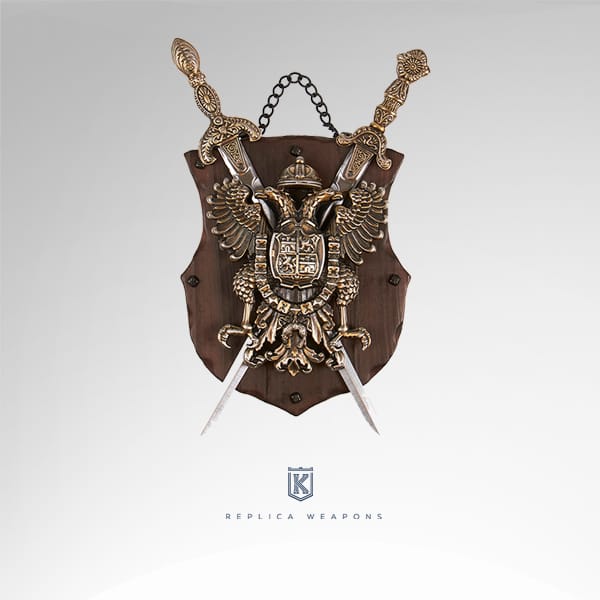
Coats of Arms

Crossbows
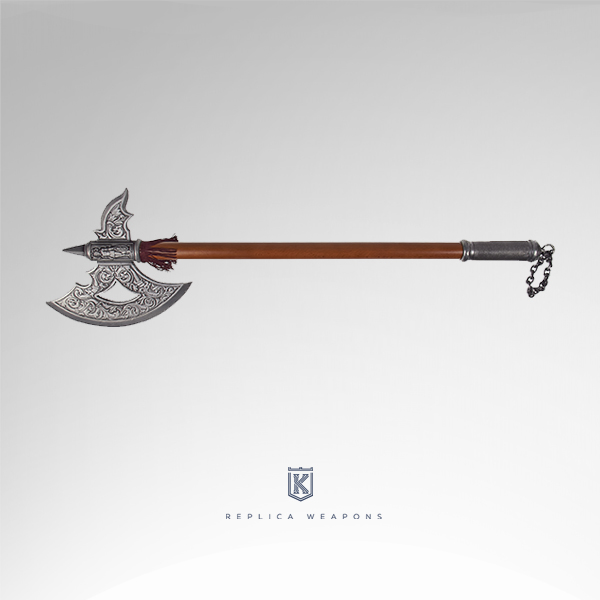
Axes

Old West Pistols
Other Weapon Replicas
Revolvers
Rifles
Flintlock Pistols
Swords
Coats of Arms
Crossbows
Axes
Old West Pistols
Frequently Asked Questions
- Hacha de mano: También conocida como hacha de leñador, es pequeña y portátil, ideal para cortar leña.
- Hacha de batalla: Utilizada en la antigüedad como arma de guerra.
- Hacha de doble filo: Tiene dos hojas y se usaba tanto en combate como en ceremonias.
- Hacha de carpintero: Diseñada para trabajos de carpintería, con una hoja afilada y un lado plano para martillar.
- Hacha de incendios: Tiene una punta en el reverso para romper paredes o techos durante operaciones de rescate.
Each type of axe has a specific design tailored to its intended use.
Polished axes are prehistoric stone tools that were smoothed and sharpened through grinding techniques. These axes were used for a variety of tasks such as tree felling, construction, and agricultural work.
The polishing process not only improved their sharpness and cutting efficiency but also made them more durable than roughly chipped stone axes. These tools represent a major technological advancement in prehistoric societies.
The design and materials of early axes varied depending on the time period and region, but they were generally made from stone and wood. During the Stone Age, the first axes were simply sharp-edged stones, known as bifaces, used for cutting and carving.
Later, in the Neolithic period, polished axes emerged — stones that were smoothed and sharpened using grinding techniques, then mounted on wooden handles for better efficiency. These tools were essential for tree felling, construction, hunting, and defence.
Modern axes are designed using advanced materials and technologies to maximise efficiency and durability. The blades are typically made from carbon steel or stainless steel, providing a long-lasting, corrosion-resistant edge.
Handles can be made of reinforced wood, fibreglass, or composite materials, offering an optimal balance between weight and strength. Many modern axes also feature ergonomic designs to improve grip and reduce fatigue during use.
These innovations make axes versatile and effective tools for a wide range of tasks.
There are many types of axes, each designed for a specific purpose. Here are a few examples:
Hand axe: Also known as a hatchet or woodcutter’s axe. Small and portable, ideal for chopping firewood.
Battle axe: Used in ancient times as a weapon of war.
Double-headed axe: Has two blades and was used both in combat and ceremonial contexts.
Carpenter’s axe: Designed for woodworking, with a sharp blade and a flat side for hammering.
Firefighter’s axe: Features a pointed rear side to break through walls or ceilings during rescue operations.
Each type of axe has a specific design tailored to its intended use.
The design and materials of early axes varied depending on the time period and region, but they were generally made from stone and wood. During the Stone Age, the first axes were simply sharp-edged stones, known as bifaces, used for cutting and carving.
Later, in the Neolithic period, polished axes emerged — stones that were smoothed and sharpened using grinding techniques, then mounted on wooden handles for better efficiency. These tools were essential for tree felling, construction, hunting, and defence.
Polished axes are prehistoric stone tools that were smoothed and sharpened through grinding techniques. These axes were used for a variety of tasks such as tree felling, construction, and agricultural work.
The polishing process not only improved their sharpness and cutting efficiency but also made them more durable than roughly chipped stone axes. These tools represent a major technological advancement in prehistoric societies.
Modern axes are designed using advanced materials and technologies to maximise efficiency and durability. The blades are typically made from carbon steel or stainless steel, providing a long-lasting, corrosion-resistant edge.
Handles can be made of reinforced wood, fibreglass, or composite materials, offering an optimal balance between weight and strength. Many modern axes also feature ergonomic designs to improve grip and reduce fatigue during use.
These innovations make axes versatile and effective tools for a wide range of tasks.
 EN
EN  ES
ES  FR
FR  DE
DE  IT
IT